


AAA Environmental Solutions helps Cary homeowners, buyers, and real estate agents find and fix hidden problems inside the home. We provide certified radon testing and mitigation, mold and air quality testing, water testing, and WDI reports. From established neighborhoods built over crawl spaces to brand-new homes in west Cary, our team tests accurately, explains the results clearly, and recommends the right solution when a problem is found.
Why Homeowners in Cary Choose Us

Certified Experts
Licensed and nationally certified for radon, mold, and water testing.

Comprehensive Services
One company for all your environmental testing needs.

Exclusive Advantage
A professional provider offering radon + WDI reports together in Cary.

Trusted Locally
Serving the greater Cary community with reliable results.
Our Services in Cary, NC

Radon Testing

Radon Mitigation

Mold & Air
Quality Testing

Water Quality Testing

WDI Reports
Ready to protect your home?
Older Homes, New Construction, and Everything in Between
Cary has a wide range of homes, and each type has its own environmental concerns. Many neighborhoods built in the 1970s, 1980s, and 1990s sit over crawl spaces, while newer homes in west Cary are often built on slabs with tighter, more energy-efficient construction. Radon can enter both. The gas rises from the soil beneath the house and moves inside through cracks in the foundation, gaps around plumbing, and open soil in crawl spaces. Tightly sealed homes can hold radon inside longer, because less outside air comes in to dilute it.
Radon has no color, smell, or taste, and it is the second leading cause of lung cancer in the United States. The EPA recommends taking action when a home tests at 4 picocuries per liter or higher. Radon levels also change with the seasons. In colder months, windows stay closed and warm air rising inside the house can pull more soil gas in at the lowest level. A certified test that follows EPA guidelines gives you a reliable picture of your home’s radon level.
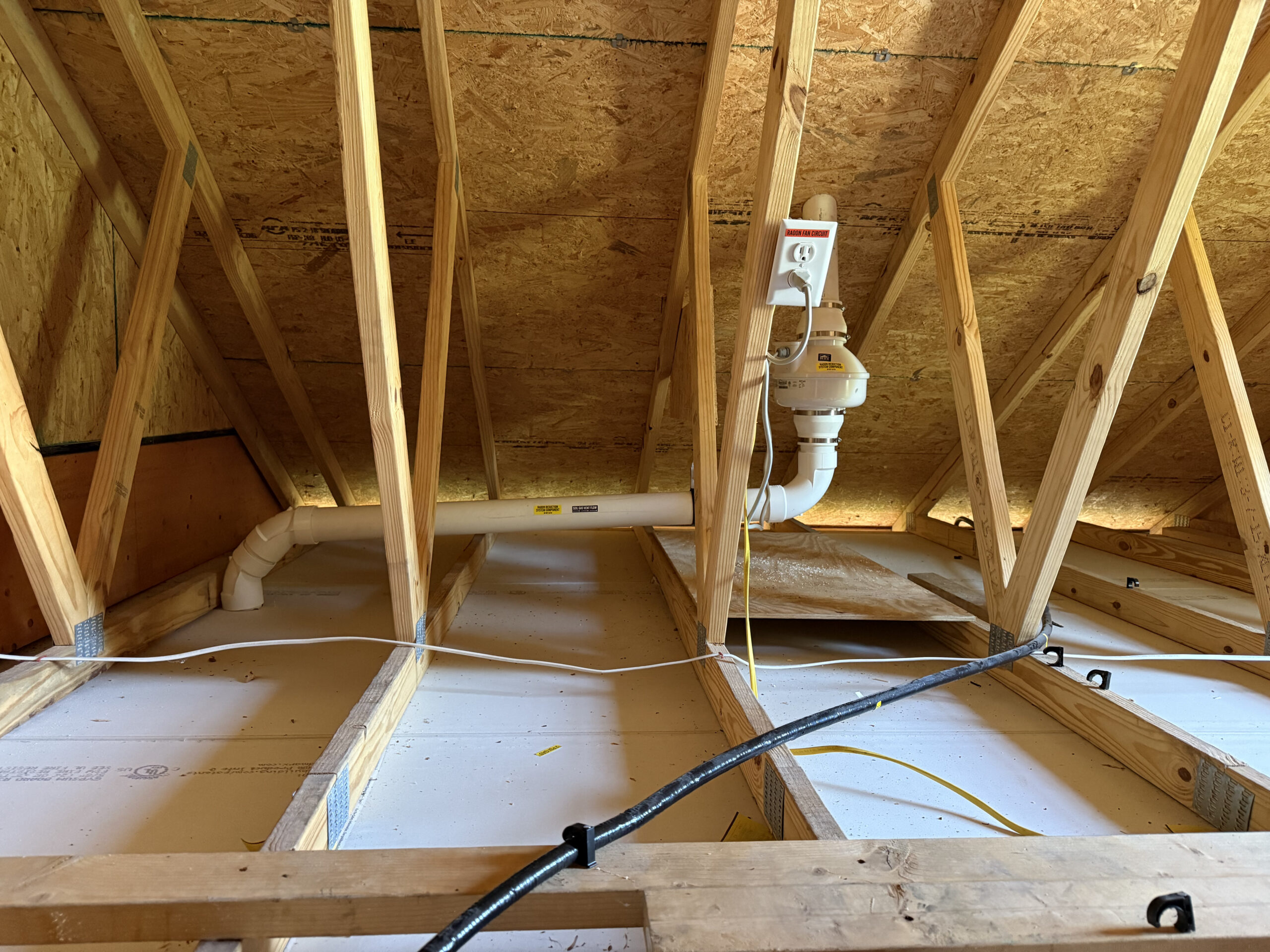
If your test shows elevated radon, our team designs a mitigation system for your foundation type. In a slab home, we typically install a vent pipe through the slab with a fan that draws radon from the soil and releases it above the roofline. In a crawl space home, we cover the ground with a sealed plastic barrier and vent the air from beneath it in the same way. After the system is installed, we retest to confirm that radon levels have dropped.
Moisture is the other major concern in many Cary homes. Mature trees shade roofs and yards, and shaded crawl spaces can stay damp for long periods during humid summers. In homes where ductwork runs through the crawl space or attic, cool ducts can collect condensation in warm, humid air. Damp wood, insulation, and ductwork give mold a place to grow, and mold spores can travel into the living space through the heating and cooling system. Our mold and air quality testing helps identify whether mold is present, how widespread it is, and where the moisture is coming from.
We also provide water testing for homes on private wells in the outlying areas around Cary, along with WDI reports for real estate transactions. Because we handle both radon testing and WDI inspections, buyers and agents can coordinate two important reports with one company during due diligence. Every report comes with a clear explanation of what we found and what your options are.
Certifications
Certified Expertise You Can Trust
When it comes to radon, credentials matter. Our team holds nationally recognized certifications from the industry’s leading authorities, ensuring every test and consultation meets the highest standards for accuracy and safety. We don’t just follow best practices—we’re certified to set them.


Protect Your Home & Family Today
Contact AAA Environmental Solutions for certified radon and environmental testing in Cary, NC
Hear From Our Valued Customers
- Tommy & his team did a great job on addressing my crawl space humidity and drainage issue. Their pricing was fair, which helped me save thousands vs. what these encapsulation companies were quoting me. Encapsulations are nice, but can be an overkill when addressing certain crawl space issues. Highly recommend AAA Environmental Solutions.
- We came across AAA when we couldn't find another company that does home pest inspections or does them for a reasonable price. Tyler kept us informed of when he would arrive and was very professional. We are now considering using them for monthly preventative pest control service because another company We used just became too expensive. And we like that its family owned. Would highly recommend! Also, the woman that answers the phones & schedules service appts (forgot name) was very polite & helpful!
- Tommy was incredible!! He found all the radon all the mold spores and gave us his best advice . He really went above beyond for our family !! Grateful to this company please use them in the future we can not say Enough about him ! God blessings to his company we are so deeply thankful for his kindness and time . Sincerely the Sickles family
- We had a random flea infestation in our rental, and scheduled an initial appointment. Chris was our exterminator, and not only did he get the job done thoroughly, he also gave us advice and information as home owners in caring for the property long term concerning pest control. He brought in 20+ years of experience to our minimal experience as home owners, and we look forward to using this service in the future. Highly recommend!
- Best of the best. The one stop shop for almost everything you need during due diligence!
- We have been a customer for over 20 years, and we knew Tommy when he worked for his dad. We were very impress with Tommy and his dad. This company is one of the most honest, and loyal business. Great company, very knowledge. You can't find a better company than AAA Exterminating.
- AAA has been a loyal partner that has supported our business for several years now. We are thrilled to introduce AAA to all our clients. We have received 5 star service from AAA and you will too.
- I have been using AAA both professionally and personally since they have entered the Raleigh market. This is a 3rd generation family from my hometown of Fayetteville and they have done solid business there for decades. Tommy and his team have carried the torch well and his Dad would be proud. They have also started doing crawlspace moisture mitigation work and are a reasonably priced solution for that as well. They deserve to be your first call, you will not be disappointed. And I am happy to speak to anyone who wants to discuss my experiences in more detail.
- Excellent company with quality work and fast report turnaround. There is no better company around and I wouldn’t trust my company needs with anyone else. These guys are honest and trustworthy.
- I have used AAA Exterminating for several years now and I would never use any other company. They are a family owned business who truly care about their customers and providing them with excellent service. Unlike other pest control companies that try to push expensive, and often unnecessary, service contracts, AAA have never tried to sell this to us. It is there if we want it but we have asked Tommy to simply come annually and do a single service (for a very reasonable price) and that has kept bugs, ants, etc away from our house for the entire year. He is very honest, thorough, reliable, knowledgeable, and professional. His wife, Kelly, who runs the office, always answers the phone quickly and is friendly, helpful, and great at scheduling when it's convenient.
- I am always pleased with the work this company provides! Dependable, trustworthy and they put the customer first. Definitely a company that I would recommend!
- Used them for years. Termite treatment and regular inspection. Got rid of a German cockroach infestation a couple of years ago.
- Tommy and his team installed a radon mitigation system in my house and I'm really happy with the results. He was able to explain everything to me in an upfront manner and wasn't trying to "sell" me on anything unnecessary. Our radon numbers are now super low.
- I am a Realtor in the Raleigh area and have recommended AAA Exterminating to many of my clients. They are extremely responsive, knowledgeable and thorough. They go above and beyond for my clients. I will most certainly continue to recommend their services and look forward to working with them in the future.
- Communication was easy and the process was smooth. Price is very fair/cheaper in comparison to other companies and home inspection add ons. Highly recommend
- Additional services that aren't on the Google listing: termite bond, vapor barrier, mold remediation in crawl space, replacing insulation in crawlspace. We have used AAA Exterminating for seven years. This company ticks all the boxes: they answer or return your phone call, they show up on time and if they will be late or early will let you know, they do their job. You don't have to wait too long for an appointment. They have been especially responsive to our needs as we were selling our house. Kelly is extremely patient. As long as she is there providing exceptional customer service, this company is bound to thrive. I am so pleased, I cannot say it enough.
- Very professional and I would highly recommend!! If I could give more than a 5 star I would.
- Tommy and AAA came to the rescue when we discovered a crawl space moisture problem while trying to sell our house. He was extremely knowledgeable and professional. He explained the situation and gave us options. Then he did the work himself on a HOLIDAY WEEKEND so we could get the house back on the market as quickly as possible! Impressive work ethic and reasonable price - we can’t ask for more.
- Trey is very knowledgable and comprehensive, I found out so many important items from the inspection!
- Outstanding service provider! Christopher P. provided professional and quality services. I cannot say enough about his customer care and his subject knowledge. I will recommend this company to my friends and family.


Frequently Asked Questions About Environmental Testing in Cary, NC
Yes. Radon comes from the soil beneath any home, whether it sits on a slab, a crawl space, or a basement. Crawl space and slab homes in North Carolina can test above the EPA action level, so testing is the only way to know.
Radon levels often rise in colder months. Windows and doors stay closed, and warm air rising inside the house can draw more soil gas into the lowest level. Testing during closed-house conditions gives a more reliable reading
The ground in the crawl space is covered with a sealed plastic barrier, and a vent pipe and fan draw radon from beneath the barrier and release it above the roof. The barrier also helps reduce moisture in the crawl space.
Yes. New construction can have elevated radon, even when the builder included radon-resistant features. Testing after the home is complete confirms whether additional mitigation is needed.
The EPA recommends retesting at least every two years after a mitigation system is installed. You should also retest after major renovations or if you begin using a lower level of the home as living space.
Yes. Ductwork in humid crawl spaces and attics can collect condensation, which allows mold to grow on or inside the ducts. Musty smells when the system turns on can be a sign. Air quality testing helps determine whether mold is spreading through the home.
Units on the ground floor are the most likely to be affected, since radon enters from the soil. Upper-floor units can still be affected in some buildings. Testing each unit gives the most accurate answer.